Sewer pipe lining does not lift a sunken pipe or change the slope of its route. A liner can rehabilitate suitable damaged pipe, but it generally follows the shape of that pipe. If a confirmed low spot is causing solids to collect, the repair plan must explain how that drainage problem will be addressed.
That distinction matters before a San Jose homeowner approves a major trenchless project. A smoother, sealed pipe interior and a properly graded drainage path are different outcomes; one does not automatically deliver the other.
Confirm What the Inspection Actually Showed
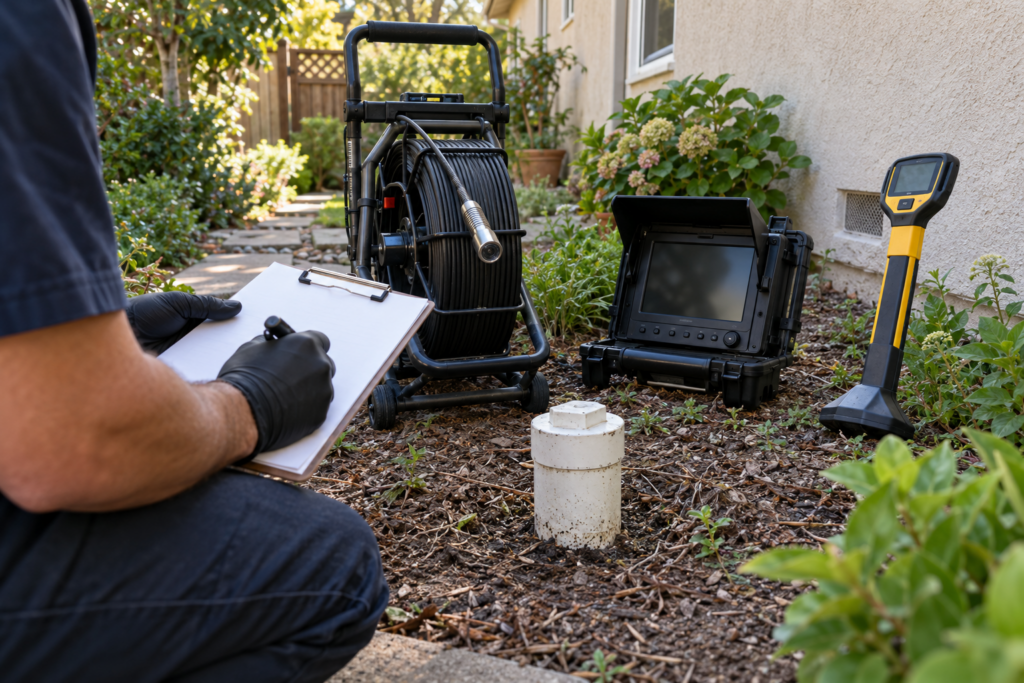
A sewer camera showing standing water is useful evidence, but it does not by itself prove that the pipe has a belly. A downstream restriction, conditions during the inspection, or another problem can also leave water in the line.
Ask what the diagnostic record established:
- The access point and direction of the camera run.
- Where a clear view was available.
- Where standing water began and ended, if visible.
- Visible defects or obstructions along the route.
- Whether appropriate cleaning changed the finding.
- Which sections remained uninspected.
- What additional information is needed to evaluate grade.
The decision should follow the supported condition of the pipe. Do not turn an incomplete or submerged view into a definite diagnosis of a low spot.
A Belly Is a Geometry Problem
A belly is a section of gravity sewer that sits lower than the adjoining drainage path. Water can remain there, and solids may collect instead of moving consistently toward the outlet.
Its importance depends on the actual extent, drainage performance, recurring symptoms, and other conditions in the line. The word “belly” alone does not establish a repair length or method.
Lining Changes the Interior, Not the Pipe Elevation
Trenchless pipe lining places and cures a liner inside a suitable existing pipe. It can address certain cracks, deteriorated surfaces, and root-entry defects after proper assessment and preparation.
The liner occupies the route the host pipe already follows. It does not excavate beneath a sagging section, lift that section, or create a new downhill alignment.
If poor grade is the main reason the line repeatedly holds waste, ask what outcome lining alone is expected to achieve and what limitation would remain afterward.
A Smoother Surface Is Not the Same as Corrected Grade
A smoother interior may improve a rough pipe surface, but it does not remove a low point in the route. Avoid comparing those improvements as though they solve the same defect.
A line can have both damaged walls and poor alignment. The proposal may need to address each condition separately rather than treating one improvement as a complete solution.
Ask the contractor to describe which observed problems the recommended work is designed to correct. That explanation should distinguish a leak or root-entry issue from a drainage-slope issue.
Cleaning Can Reveal the Pipe but Cannot Raise It
Appropriate cleaning may remove material that hides the pipe’s condition. A clearer inspection afterward can help separate removable buildup from an unchanged structural or alignment problem.
Cleaning does not change the elevation of the buried pipe. A cleared line can flow temporarily while a low spot continues to collect material over time.
Tell the plumber how long flow lasted after earlier service and whether the same fixtures backed up again. That history supports the evaluation without proving the cause by itself.
Pipe Bursting Also Needs a Specific Grade Plan
Trenchless pipe bursting replaces pipe along an existing route. It should not be assumed to correct a low spot merely because the replacement pipe is new.
Ask how the proposed replacement will achieve the required drainage alignment at the affected section. The answer may involve access or work that is different from a straightforward pull through the existing route.
The EPA’s sewer-renewal decision report identifies existing alignment, access, and other pipe characteristics as factors in choosing a method. Trenchless suitability needs a project-specific assessment.
A Corrective Repair Must Address the Confirmed Condition
Where a low spot needs correction, a contractor may discuss opening the affected area, resetting or replacing the section, and reconnecting it to the adjoining line at an appropriate alignment.
The practical method depends on the route, depth, access, nearby utilities, retained pipe condition, and how much of the line is affected. No standard repair can be selected from the camera image alone.
Ask whether the proposal addresses only a localized section or includes a longer replacement. The boundary should match the findings and explain the condition of the pipe being retained.
Questions to Ask Before Approving Lining
If lining has been proposed and the inspection mentions standing water or a low spot, clarify the following before choosing the work:
- Is a belly confirmed, or is it still a possible explanation?
- Which observation supports the diagnosis?
- Does the proposed liner address the cause of recurring backups?
- What pipe shape or grade limitation will remain?
- Is a separate corrective repair recommended?
- Which section will be lined and which will stay untreated?
- How will connections and drainage be checked afterward?
- How are unresolved inspection limitations documented?
A clear answer may confirm that lining is suitable for a different defect. It may also show that another step is needed first. Both outcomes are more useful than a promise based on the method’s name.
Compare the Repair Outcomes in Writing
When comparing proposals, align the diagnosed problem and promised outcome before comparing the totals. Look for:
- The condition being corrected.
- The start and end points of the work.
- The method and access openings required.
- Any grade-correction work included.
- Connections and retained sections.
- Post-work testing or inspection.
- Surface restoration responsibilities.
- Exclusions and approval for additional findings.
A price for interior rehabilitation is not directly comparable to a price that also corrects the pipe route. Ask for the differences to be explained in practical terms.
Stop Water Use During an Active Backup
If wastewater is entering a tub, shower, floor drain, or other area, stop using plumbing and keep people and pets away from the affected water. Arrange prompt professional help.
Do not open cleanout caps, pour chemical cleaner into the system, or run water to test the suspected low spot. Stabilization and the permanent repair decision should be distinguished clearly.
Discuss the Right Sewer Repair Outcome in San Jose
The useful choice is the work that addresses the confirmed problem in your line. Lining can be valuable for suitable pipe damage, but a drainage-slope concern needs its own explanation and repair plan.
Bigg Tree Rooter & Plumbing can evaluate sewer conditions and discuss lining, replacement, or another appropriate next step. Call (408) 373-8484 to request a sewer evaluation for your San Jose home.